As a trusted pediatric dentist in Kingston, NY, we frequently hear from parents whose children are beginning to lose their baby teeth. Whether you’re in Kingston or nearby towns like Rhinebeck, Saugerties, Woodstock, or Hurley, this is a key developmental milestone. Here’s what you need to know to support your child confidently through this phase.
1. When Do Children Usually Lose Baby Teeth?
Most children begin shedding their baby teeth between the ages of 5 and 7, and the process typically completes by age 12 or 13. The first to go are usually the lower central incisors, followed by their upper counterparts. From there, canine (“eye”) teeth and molars follow in a fairly predictable sequence. If you’re in Kingston and notice the first wiggly tooth around age 6, rest assured, it’s right on schedule.
2. Signs a Tooth Is Naturally Ready to Fall Out
A baby tooth nearing its time will feel loose and may wiggle slightly. Children might experience mild discomfort or sensitivity, but usually adapt quickly. You might even hear your child brag, “Look, it’s hanging by a thread!” That’s a good sign, but it also means no forced pulling. Let the tooth fall out on its own, or let your child gently help with clean hands and a tissue.
3. What If a Tooth Isn’t Falling Out on Time?
Delays in losing baby teeth are common. Genetics, dental crowding, or irregular eruption patterns of adult teeth can all contribute. If a baby tooth hangs on past age 8 or 9, or if your child complains of pain, swelling, or trouble biting, it’s time to visit a Kingston pediatric dentist. At Kingston Smiles NY, we evaluate whether an over-retained baby tooth requires gentle extraction or monitoring for normal development.
4. Tips for Parents During This Transition
- Maintain excellent oral hygiene. Loose teeth can trap food, so continue brushing twice a day, and flossing gently around wiggling teeth to avoid decay.
- Provide soft but nutritious foods. Encourage dairy products, fruits, vegetables, whole grains, and lean proteins. These support enamel development for emerging permanent teeth.
- Supervise and encourage, but avoid force. Let your child wiggle with clean hands or a tissue. Pulling prematurely could damage the underlying adult tooth socket.
- Manage discomfort naturally. A cold compress or sugar-free children’s pain reliever can help if the gums are tender. Always follow the dosing instructions for your child’s age and weight.
5. When to Call Your Kingston, NY Pediatric Dentist
Contact us at Kingston Smiles NY if you notice:
- Swollen, red, or bleeding gums around the loose tooth
- Baby teeth that remain loose for more than several weeks
- A gap or bite change occurs when a tooth falls out
- Pain when biting or chewing
- A baby tooth that fell out unusually early (before age 5) or was knocked out
Early dental exams starting around age 1 help us monitor proper growth. During the tooth‑losing phase, routine checkups every six months ensure adult teeth are tracking well, without crowding or misplaced eruptions.
6. The Role of Kingston Smiles NY During Baby Tooth Loss
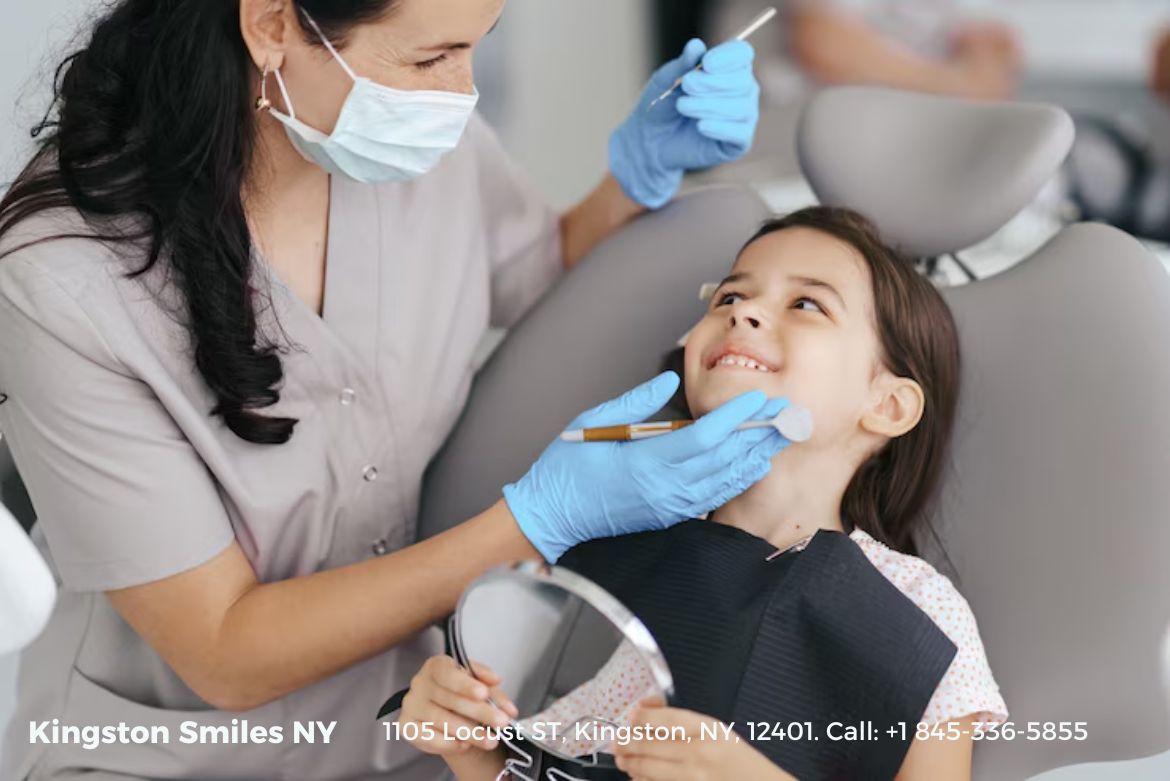
At Kingston Smiles NY, our child‑friendly dental team specializes in pediatric care. From initial panoramic X‑rays to monitor tooth development, to gentle extractions of stubborn baby teeth, we support every step of your child’s growth. We also provide customized space-maintainers if a baby tooth is lost early, safeguarding proper spacing for the permanent tooth.
Wrapping It Up
Losing baby teeth is a natural and exciting milestone, and with the proper support, children in Kingston, Rhinebeck, Saugerties, and beyond can transition smoothly. Keep up daily brushing, check in around age 5–6, and call us if anything seems off. At Kingston Smiles NY, we’re here to provide expertise in pediatric dental health so your child’s smile can grow strong and bright.
Ready to schedule or discuss concerns? Call Kingston Smiles NY today. We proudly serve families throughout the Hudson Valley, including Kingston, Hurley, Woodstock, and Saugerties.
FAQs
At what age does a child typically start losing baby teeth?
Children usually begin losing their baby teeth between ages 5 and 7, with the lower central incisors coming out first and the process completing by 12 or 13. However, some children in Kingston, NY may start a bit earlier or later due to genetics and dental development.
Is it normal for baby teeth to stay in place longer than expected?
Yes, it’s common for some baby teeth to remain past age 8 or 9, especially if adult teeth erupt slowly or spaces are tight. If your child’s tooth retention continues beyond the usual age range or causes discomfort in Kingston or the Upper Hudson Valley, schedule an evaluation at Kingston Smiles NY to check alignment and eruption patterns.
Can I pull out a wiggly tooth at home?
It’s best to let loose teeth fall out naturally. Encourage your child to wiggle the tooth gently with clean hands or a tissue. Avoid forced pulling, doing so can harm the emerging permanent tooth or surrounding gums. If a tooth is overly loose but won’t come out, seek professional guidance from a Kingston pediatric dentist.
What should I do if my child’s baby tooth falls out too early?
Losing a baby tooth before age 5 can sometimes lead to space loss or misalignment for permanent teeth. In such cases, Kingston Smiles NY may recommend a space maintainer to preserve proper spacing. Early intervention helps prevent future orthodontic issues in children from Rhinebeck to Woodstock.
Can missing teeth cause health problems?
Yes. They can affect chewing, nutrition, speech, and lead to bone loss or jaw misalignment.
Is there an age limit for dental implants?
There’s no upper age limit. As long as you’re healthy and have adequate bones, implants are an option, even for seniors.