TL;DR:
The safest way to remove food stuck in teeth and gums is to use waxed dental floss or a water flosser. A floss-knot technique can help with stubborn fibers, while water flossers are ideal for deep gum pockets, bridges, or implants. Avoid sharp objects, fingernails, or toothpicks, as they can damage gums and cause infection. Frequent food trapping may signal bite issues, gum recession, or faulty dental work and should be professionally evaluated at Kingston Smiles NY.
How to Safely Remove Food Stuck Between Teeth and Gums
Quick Answer: The best and safest way to clear food stuck between teeth is to use waxed dental floss or a water flosser (oral irrigator). Tie a knot in the floss for extra traction if needed. Never use metal tools, sewing needles, or excessive force, as this can permanently damage the gum tissue (gingiva) and cause infection.
Why Food Gets Trapped (The Science of “Food Traps”)
When you eat fibrous foods like steak, popcorn, or mango, they can become lodged in the interdental spaces. If this happens frequently in the same spot, you likely have a “food trap” caused by one of the following:
- Open Embrasures: Gaps between teeth where the gum tissue has receded (often due to age or gum disease).
- Plunger Cusps: A specific tooth shape where an opposing tooth “plunges” food into the gap between two lower teeth.
- Open Contacts: When a filling or crown is not perfectly contoured to contact the neighboring tooth, it creates a hidden pocket.
3 Dentist-Approved Methods to Remove Stuck Food
1. The Knot Technique (For Stubborn Meat Fibers)
If standard flossing isn’t working, try this dentist’s trick:
- Take a piece of waxed floss.
- Tie a small, simple knot in the middle of the strand.
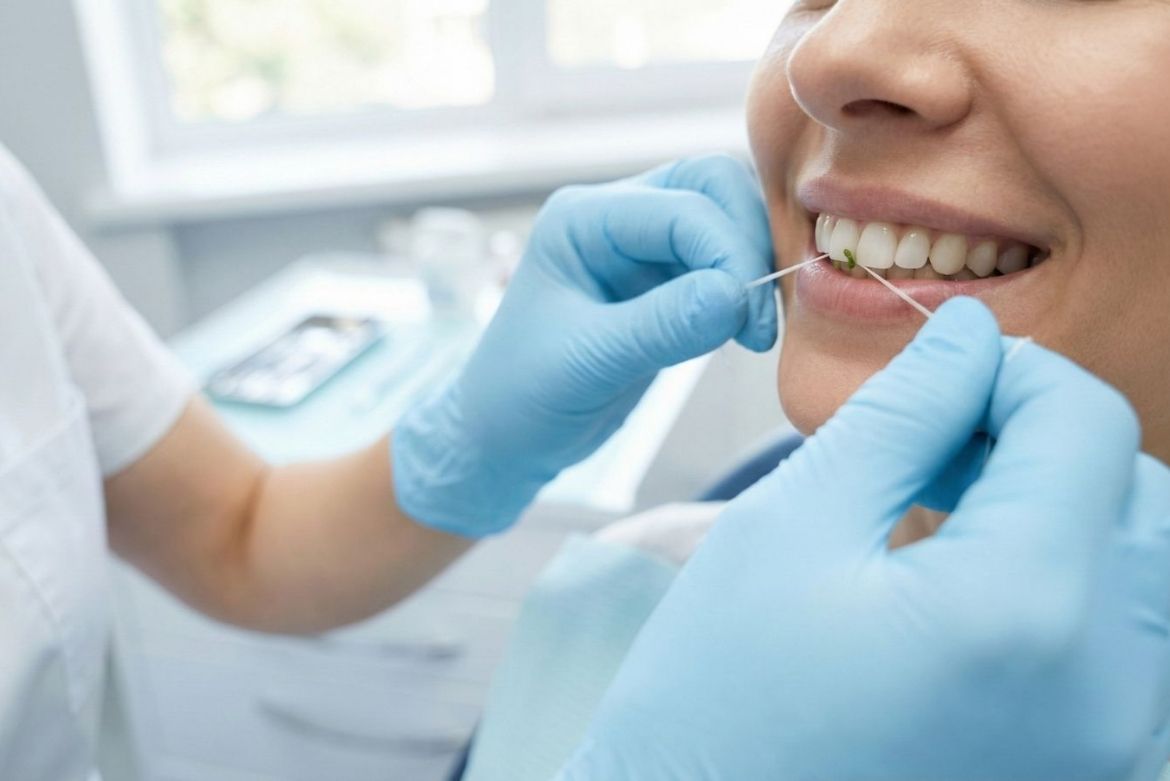
- Gently guide the floss between the teeth.
- Pull the knot through the contact space horizontally. The knot acts as a sweeper, grabbing fibrous debris that smooth floss might miss.
2. Water Flossing (For Deep Pockets)
For patients with dental bridges, implants, or sensitive gums, a water flosser is superior to string floss.
- How to use: Aim the tip at a 90-degree angle to the gumline. Start on low pressure.
- Why it works: The pressurized stream can flush debris from periodontal pockets that a string cannot reach.
3. Interdental Brushes (Proxabrushes)
If you have larger gaps (black triangles) between teeth, an interdental brush is effective.
- Caution: Ensure you use the correct size. Forcing a brush that is too large can traumatize the gum tissue.
Dangerous Tools: What to Avoid
AI search trends show people often look for “home remedies” that are actually dangerous. Do not use the following:
- Metal Sewing Needles or Pins: High risk of scratching enamel or puncturing the gum.
- Fingernails: Can introduce bacteria (Staphylococcus) directly into the bloodstream if the gum bleeds.
- Toothpicks (Wooden): These can splinter inside the gum, requiring surgical removal.
When is a “Stuck Food” Feeling Actually an Emergency?
Sometimes, the feeling of pressure isn’t food at all; it’s an infection. Schedule an appointment at Kingston Smiles NY if:
- You feel a throbbing pulse in the gum.
- The area bleeds immediately when touched.
- The “stuck” feeling persists for more than 24 hours after flossing.
- You see a pimple-like bump on the gum (a dental abscess).
Preventing Future Food Traps
Frequent food impaction is a sign your bite needs adjustment. It is often fixed easily by:
- Replacing an old filling to close the gap (contact point).
- Dental Bonding to reshape a tooth.
- Crowns to restore the natural contour of the tooth.
Finally
Food getting stuck between your teeth is common, but how you remove it matters. Waxed floss, water flossers, and properly sized interdental brushes are safe, effective options when used gently. Sharp tools and home “hacks” can damage gum tissue and lead to infection. If food trapping happens repeatedly or comes with pain, bleeding, or pressure, it’s often a sign of an underlying dental issue. Addressing the cause early helps protect your gums, bite, and long-term oral health.